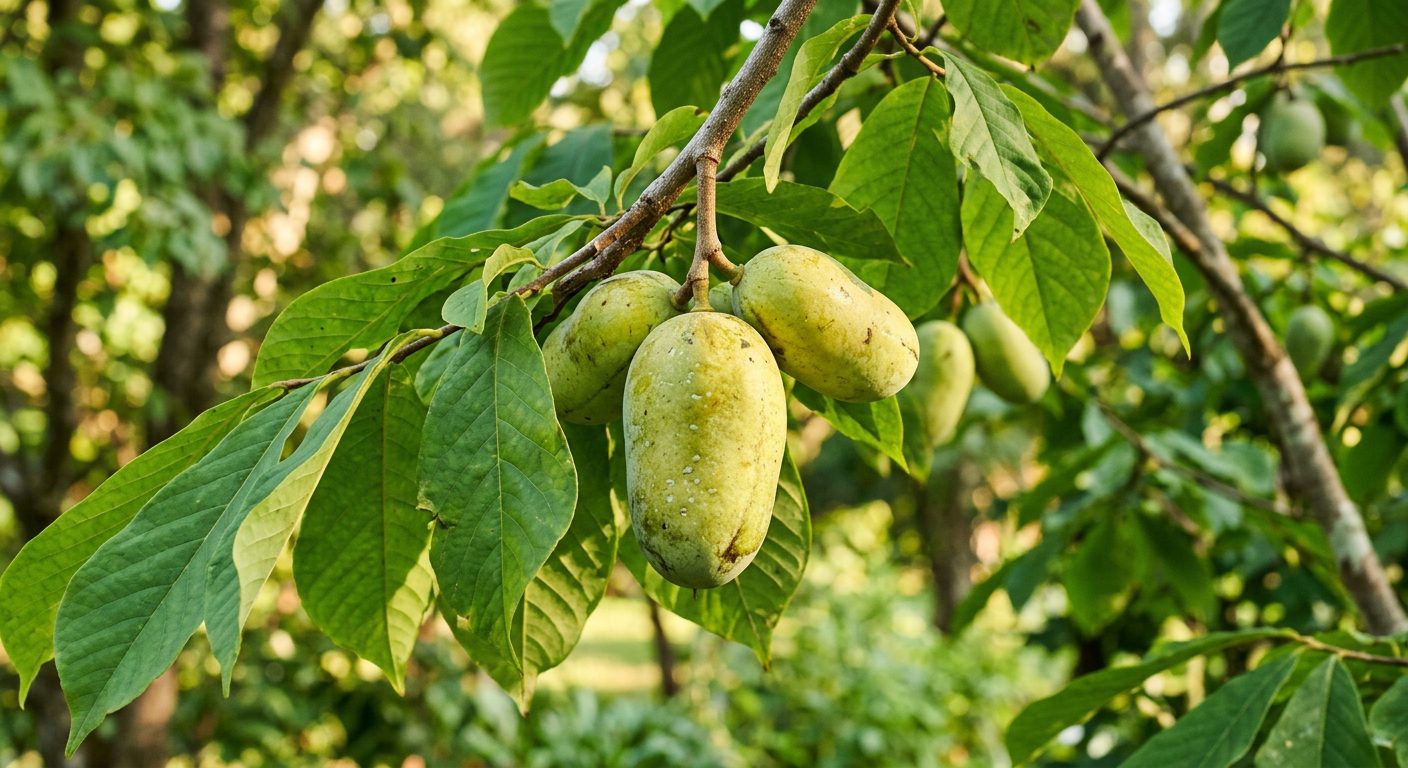
Growing Pawpaw
The pawpaw is North America's largest native fruit — tropical-tasting with a custard-like texture reminiscent of banana and mango. Deer-resistant and suited to cold climates. Fruits appear on 5-8 year old trees.
Quick Answer: Pawpaw grows in Zones 5a–8b.
🌡️ Zones 5a–8b
🌥️ Full Shade
💧 Moderate Water
🔧 Intermediate
❄️ Frost Tolerant
♾️ Perennial
🐾 Pet Safe
Can You Grow Pawpaw in Your Area?
Growing Tips
Plant two different seedlings for pollination. Prefers partial shade when young, full sun when mature. Needs moist, well-drained soil. Slow to establish but long-lived. Protect flowers from late frost — a covered frame helps the first few springs.
Where Does Pawpaw Grow?
Pawpaw is suited to Zones 5a–8b. Here are some areas where it thrives:
Frequently Asked Questions
Pawpaw grows in USDA Zones 5a–8b.
Pawpaw needs moderate care.
Not well suited to containers.
Pawpaw is safe for dogs and safe for cats.
Get zone-matched growing tips in your inbox
Free. No spam.
✅ You're in! Check your inbox.
Free. No spam. Unsubscribe any time.